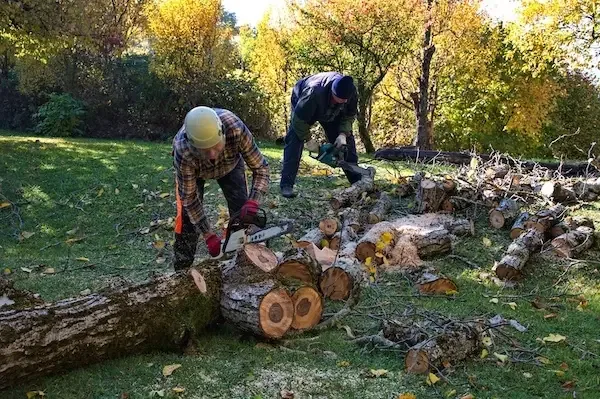
Tree Removal
Dead, failing or badly placed trees taken out whole, or dismantled in sections over a roof or pool.
Learn more →Removals, lopping, stump grinding and palm work from Coomera to Coolangatta, with the council position sorted before anyone starts cutting.
Tree Care Gold Coast arranges tree removal, tree lopping, pruning, stump grinding and stump removal, palm work, land clearing and emergency storm response for houses, body corporates and commercial sites across the Gold Coast. The work is carried out by experienced arborists with maintained gear, and the first thing that happens on any job is working out whether the tree can legally be touched.
That step matters here. The City of Gold Coast planning scheme protects vegetation through a vegetation management overlay that covers a great deal of the hinterland fringe, the coastal dune systems and the remnant bushland pockets inside suburban streets. Some individual trees carry protection on top of that. A crew that turns up and starts cutting without checking can leave you holding a fine that dwarfs the cost of the job.
Most calls fall into a handful of jobs. Whole tree removal where a tree is dead, structurally failing or simply in the wrong place. Tree lopping to take weight off limbs hanging over a roof, a pool or a neighbour's fence. Pruning to Australian Standard AS 4373 so a tree keeps its shape and its health rather than throwing a flush of weak regrowth. Stump grinding after a removal, or full stump removal where new footings or a pool shell need clear ground.
Then the Gold Coast specialties. Palm removal — cocos, Alexandra, Bangalow and golden cane — and palm tidying so fronds and seed heads stop landing on cars and pool fences. Land clearing on acreage and building envelopes. Emergency and storm work when a limb comes down in a summer southerly.
What we will not do is top a healthy tree because it has grown tall. Cutting a mature eucalypt back to stubs produces weakly attached regrowth that is more dangerous in five years than the original tree, and on a protected tree it is also an offence.
The Gold Coast grows things fast. Poinciana is the classic street and back-garden tree here, spectacular in December and notorious for shedding heavy horizontal limbs in wet weather. Weeping figs and Moreton Bay figs planted in the 1960s and 1970s are now enormous, with root plates lifting driveways and finding sewer joints. Eucalypts — blackbutt, tallowwood, forest red gum — hold the hinterland fringe at Nerang, Mudgeeraba and Tallai, and drop limbs in still hot weather as well as in storms.
On the coastal strip the story is salt and wind. Everything from Main Beach south to Coolangatta sits in a cyclonic wind region under AS 1170.2, and coastal blocks get salt-laden onshore wind that kills crowns back on the seaward side and accelerates decay in wounds. Norfolk Island pines, cocos palms and beach she-oaks dominate that frontage.
Every quote is free and given after someone has looked at the tree, the access and what sits underneath it. A fifteen-metre gum over a canal-front pool at Broadbeach Waters and a fifteen-metre gum in an open paddock at Guanaba are not the same job. The cost guide explains exactly what moves the number, including the only price range the business publishes.
Ring (07) 5230 8034, tell us the suburb and roughly what you are looking at, and we will tell you whether it needs an application, a climber or a machine. The service area pages cover what is specific to each suburb, the FAQ answers the approval questions people ask most, and the blog has the long guides on palms and transplanting.
City of Gold Coast runs a vegetation management overlay and a protected-tree register. We tell you whether your tree is caught by it before anyone prices a cut.
Canal blocks at Broadbeach Waters and Hope Island, and high-rise setbacks at Surfers, are craned, barged or climbed. The access drives the price more than the tree does.
Mudgeeraba, Nerang, Tallai and Bonogin fall away behind the house. We quote on how the timber gets out, not just how it comes down.
November to March is limb-failure season on the Gold Coast. Ring and say what has failed, where it landed, and whether a powerline is involved.
Dead, failing or badly placed trees taken out whole, or dismantled in sections over a roof or pool.
Learn more →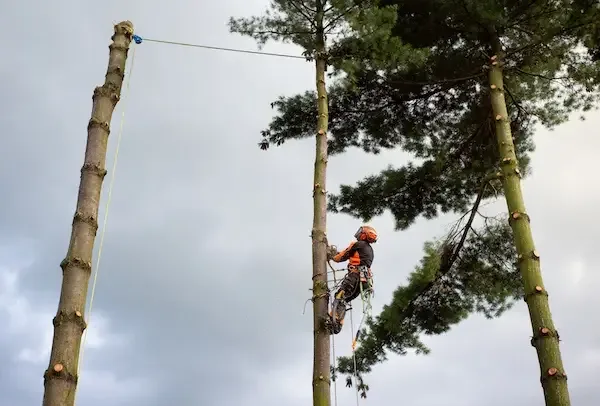
Weight reduction and limb removal on overgrown gums, figs and poincianas crowding a house or fence line.
Learn more →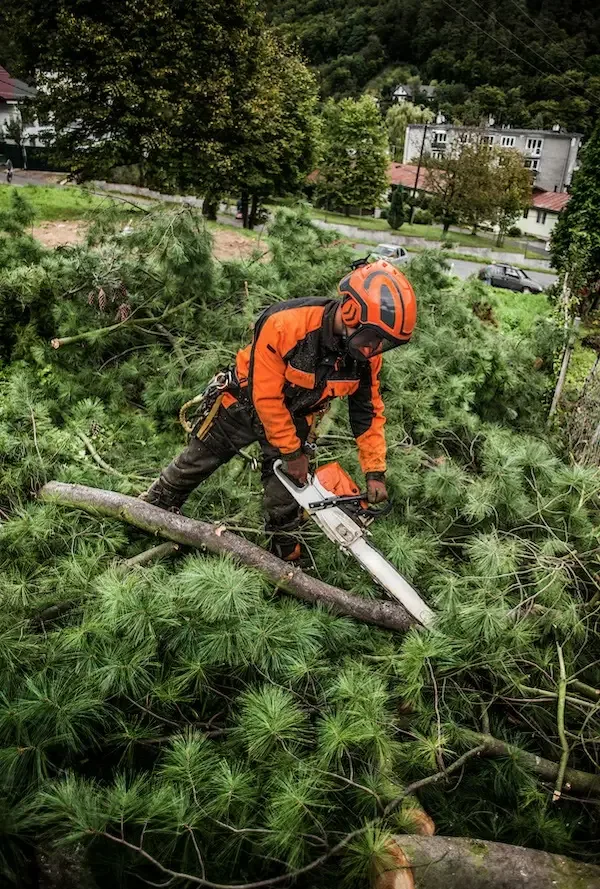
Crown lifting, thinning and clearance pruning done to AS 4373 so the tree survives the cut.
Learn more →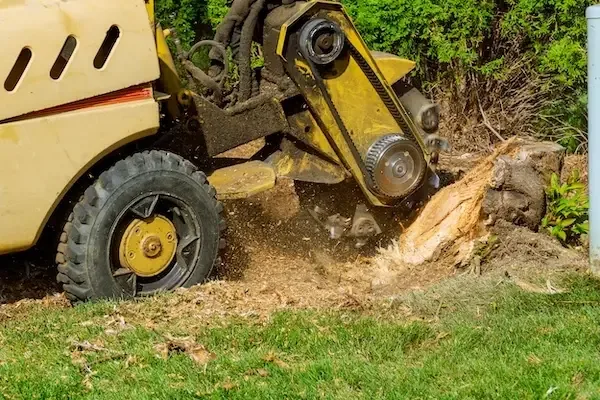
Stump and buttress roots ground below ground level so you can turf, pave or replant over the top.
Learn more →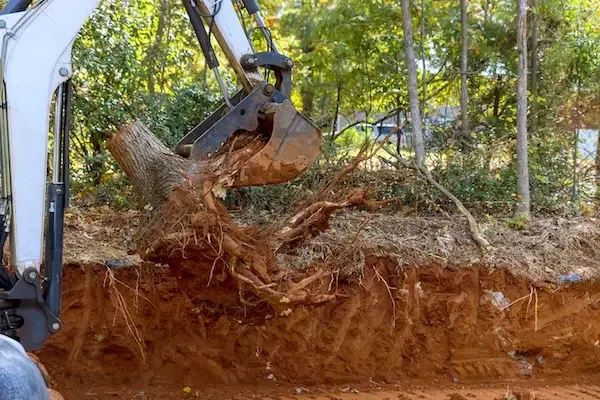
Stump and root plate dug out entirely where footings, a pool shell or new services need clear ground.
Learn more →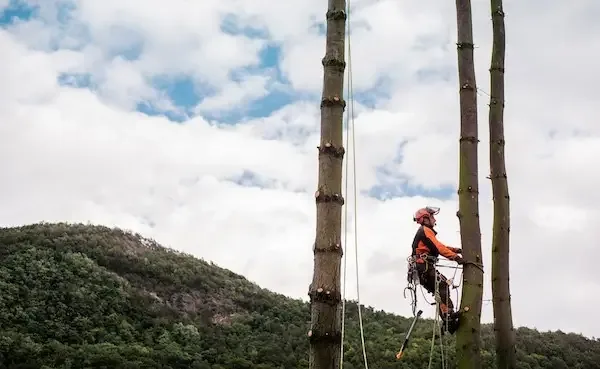
Cocos, Alexandra, Bangalow and golden cane palms taken down in driveway-width space, roots and all.
Learn more →
Frond, seed-head and dead-skirt removal so palms stop dropping fronds on cars, paths and pool fences.
Learn more →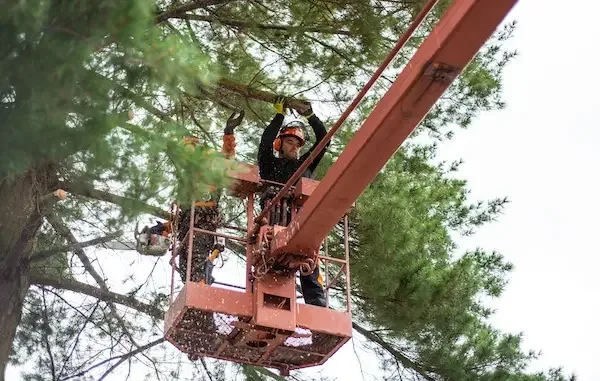
Split trunks, limbs on roofs and trees across driveways after a Gold Coast summer storm.
Learn more →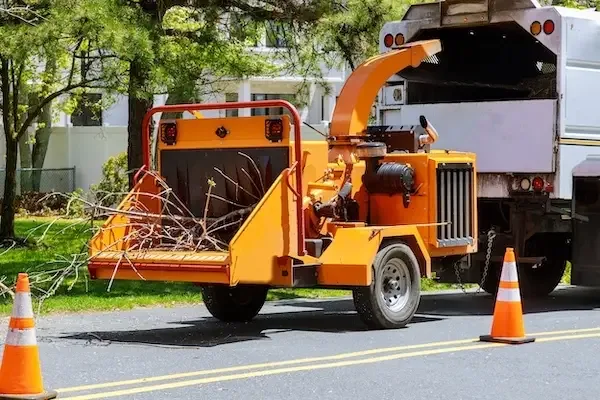
Building-envelope and acreage clearing, mulched on site or carted, with the overlay position checked first.
Learn more →Often yes. City of Gold Coast protects vegetation through its planning scheme, including a vegetation management overlay and a register of significant trees. Whether your tree is caught depends on the overlay mapping for your lot, the species, and where the tree sits. We identify the species and check the overlay position before quoting, and we will tell you if an application is needed.
In Australia the words get used interchangeably, but an arborist holds formal qualifications in arboriculture. The practical difference is judgement: knowing which limb can come off without destabilising the tree, how a fig or poinciana responds to a reduction, and when a tree should not be cut at all. Ask whoever quotes your job what qualification they hold.
The business publishes a range of roughly $800 to $6,000 for tree removal on the Gold Coast, which is wide because the job varies enormously. Size, species, what sits under the tree, machine access and how the timber leaves the site all move the number. A quote is given after someone has looked at the tree, not over the phone.
Yes. Storm callouts run heaviest between November and March when the afternoon storms come through. Ring (07) 5230 8034 and say what has failed, where it has landed and whether anyone is cut off. Anything in contact with an Energex line is reported to Energex first — a tree crew cannot legally work on a live conductor.